Running out of things to post is not a creativity problem. It is a production problem — and it is solved on the day of the shoot, not on the Monday you need a post.
The pattern is familiar. A business commits to being more active online. Content gets made in bursts, usually by whoever has the least on that week. Three good weeks are followed by two quiet months. The account starts to read as abandoned, which is worse than never having started.
Everyone involved knows what happened: nobody had time. But the real failure happened earlier, in how the content was planned.
The difference between making content and having a system
Making content is producing a thing when you need a thing. It scales badly, because the cost of each asset stays constant and the requirement never stops.
A content system produces raw material in batches and then cuts it into many finished pieces. The cost is front-loaded into planning and a production day, and the output continues for months. The distinction sounds procedural. It is the entire difference between a channel that survives and one that does not.
What a properly planned shoot day produces
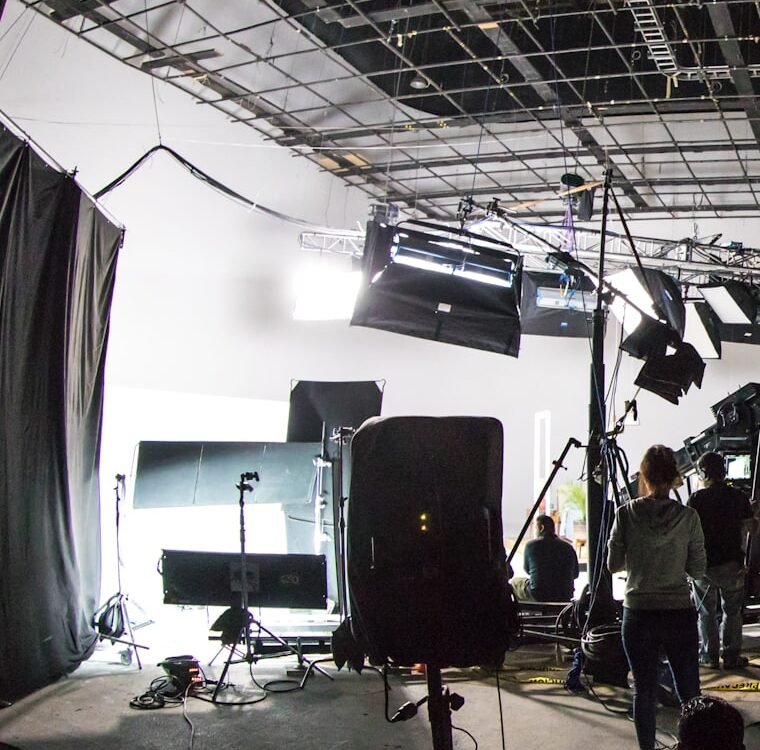
A single well-planned day on site — a factory floor, a clinic, a kitchen, a workshop — can reasonably yield:
- Photography for the website: hero images, service pages, team, environment.
- Product or process photography that can carry a store or a specification page.
- Vertical video for reels and short-form, shot deliberately in that ratio rather than cropped from landscape afterwards.
- Longer-form footage for a site header or a capability film.
- Interview and voiceover audio, which becomes captions, quotes and written content.
- Campaign creative for paid social, produced from the same material so ads and organic content look like the same business.
The important word in that list is deliberately. The yield comes from planning the assets before the day, not from filming a lot and hoping.
Nobody runs out of things to say. They run out of things that have already been produced.
The plan that makes it work
Before a shoot we settle four things:
- The asset list. Exactly what has to exist afterwards, with formats and ratios named.
- The message each asset carries. Tied back to positioning, so nothing is produced just because it looked good.
- The shot list against the schedule. Including the specific hour a room or a machine actually looks its best, which is a real constraint and not a nicety.
- Where each piece goes and when. A publishing plan, so material does not sit in a folder.
Where AI-assisted video genuinely helps
Some material does not justify a crew. Explainer cuts, caption-driven pieces, quick topical responses, variations of an existing edit for a second audience — these can be produced fast and cheaply, and there is no honest reason to pretend otherwise.
Where it does not help is anywhere the point is the real thing: your actual premises, your actual people, your actual product being made. Synthetic material in those places reads as exactly what it is, and in categories built on credibility that is an expensive mistake.
The judgement is about which mode each asset needs, and being straightforward with clients about which is which. Volume and turnaround are real requirements. So is the difference between showing your workshop and showing something that looks like a workshop.